May 11, 2026 • Tomás Guerreiro • 10 min reading time • Specs verified June 18, 2026
Orbit B-hyve vs. Rachio 3 for Budget-Conscious Builders: Where the $100 Price Gap Actually Shows Up
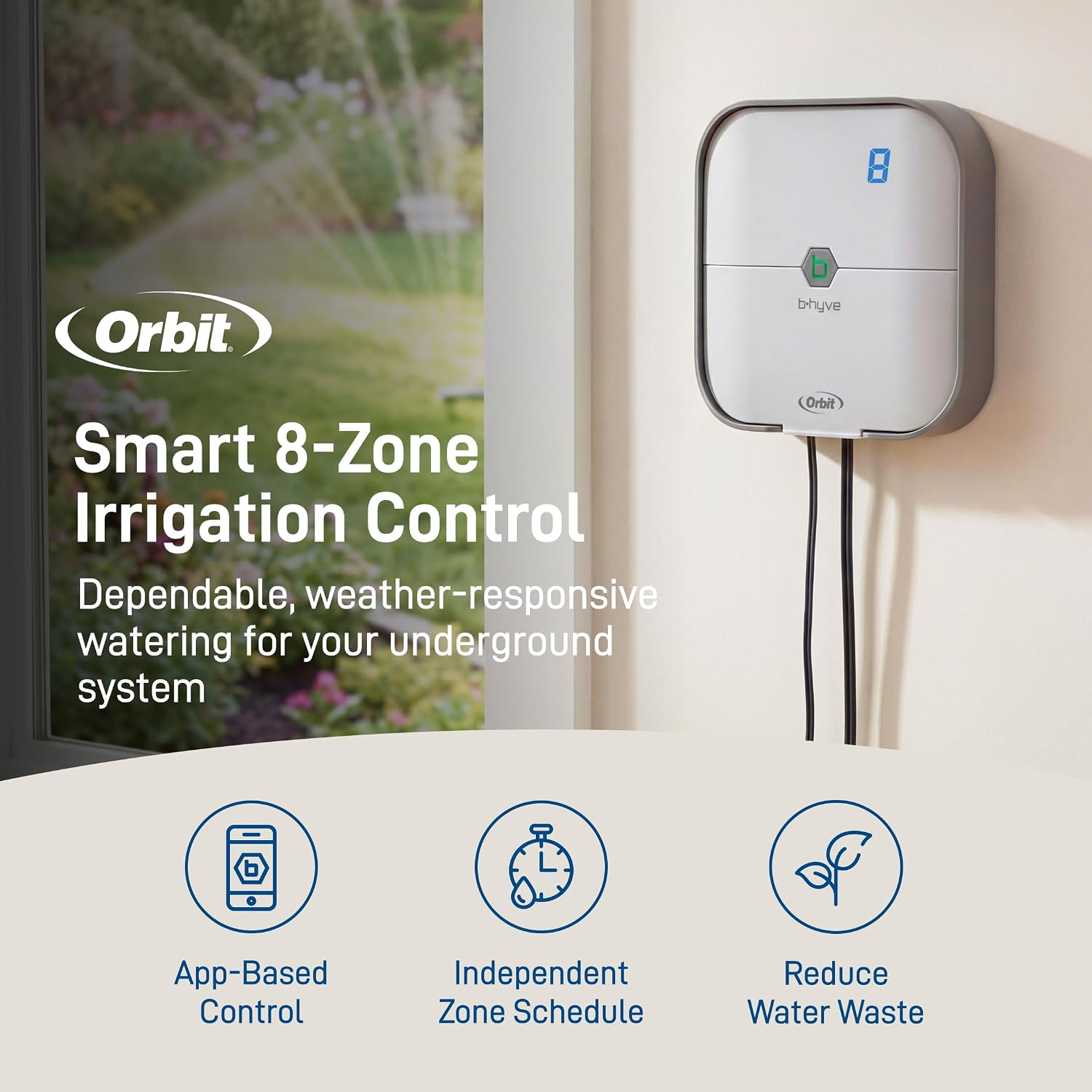
A smart irrigation controller is the brain of your sprinkler system — it replaces a basic timer with a device that reads local weather data and adjusts watering schedules automatically, so you’re not running sprinklers the morning after a rainstorm. Two controllers dominate the mid-market right now: the Orbit B-hyve (roughly $80–$130 depending on zone count) and the Rachio 3 (roughly $170–$230 for the same zone count). That spread looks like a straightforward “budget vs. premium” choice, but it’s more textured than that. If you’re building a multi-zone system — even a modest six- to eight-zone residential setup — choosing the wrong controller can mean retrofitting hardware later or leaving real water savings on the table. This article breaks down exactly where that $100 price gap shows up in practice, zone by zone and feature by feature, so you can make the call with your eyes open.
The Spec Sheet Comparison: What $100 Buys You on Paper
Before getting into the nuance, here’s the objective side-by-side. Both controllers carry EPA WaterSense certification, per the EPA WaterSense Labeled Controllers Program Overview published at epa.gov/watersense/controllers — meaning both are independently verified to use weather and site data to reduce water use versus a standard clock timer. That’s the baseline. The question is what happens above that baseline.
8-zone models, May 2026 pricing:
| Feature | Orbit B-hyve 8-Zone | Rachio 3 8-Zone |
|---|---|---|
| Street price (approx.) | $110–$130 | $195–$230 |
| WaterSense certified | Yes | Yes |
| Weather intelligence | Basic ET-based | Hyperlocal ET + predictive |
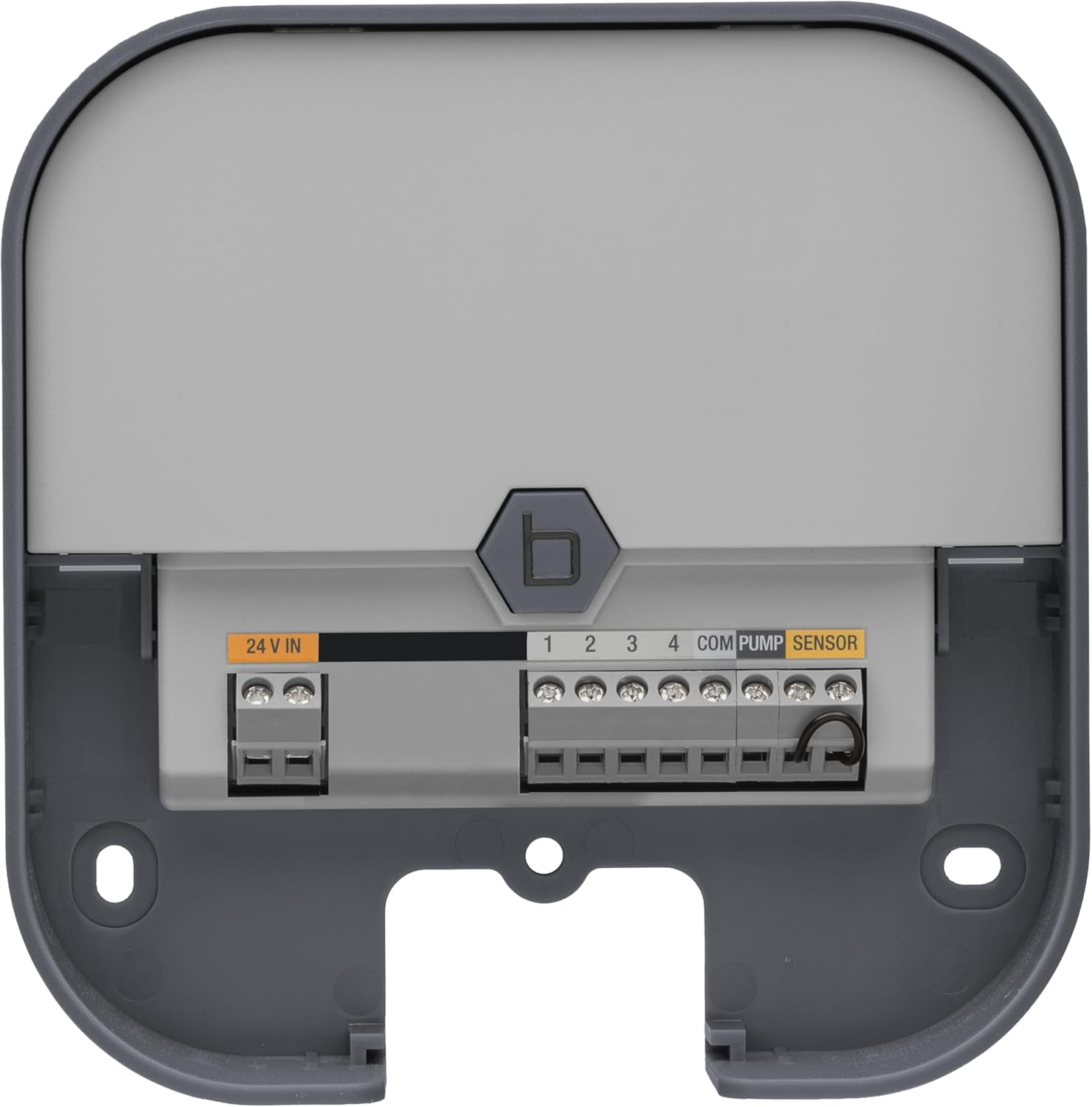
| Flow sensor support | No (most models) | Yes |
| Zone-level soil/shade inputs | Limited | Full per-zone customization |
| API / third-party integrations | Limited | Extensive |
| App reliability (aggregated reviews) | Mixed | Consistently rated strong |
Orbit
$77.97
In stock on Amazon
Check price on Amazon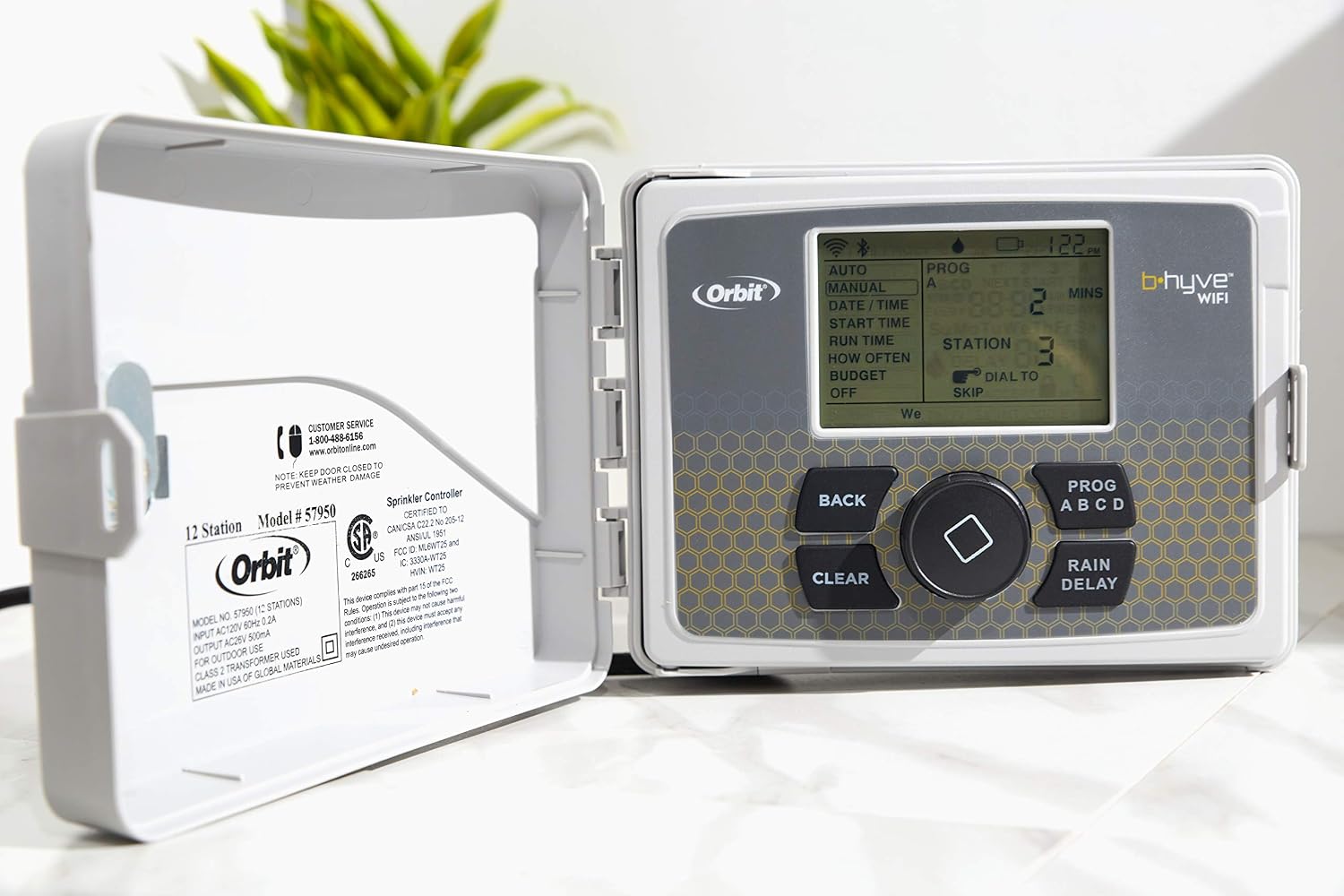
Orbit
$108.56
In stock on Amazon
Check price on Amazon
Rachio
$199.00
In stock on Amazon
Check price on AmazonWhere the B-hyve Holds Its Own
Let’s be honest about where Orbit earns its place, because this isn’t a “just spend more” article.
For a first component-build — a homeowner stepping up from a basic box kit into their first four- to six-zone system — the B-hyve is a genuinely capable controller. The core ET (evapotranspiration) scheduling logic works. ET is a measure of how much water plants lose to evaporation and transpiration on a given day; a controller that adjusts run times based on local ET data will save meaningful water versus a dumb timer. Both controllers do this.
The B-hyve’s app, while less polished than Rachio’s, covers the basics: seasonal adjust, rain skip, and watering schedules by zone. This Old House’s 2025 Best Smart Sprinkler Controllers review roundup identifies the B-hyve as a legitimate WaterSense performer at its price point, with reviewers finding the setup process straightforward for standard residential layouts.
If your system has:
- Four to six zones
- Uniform plant types per zone (all turf, or all shrub beds — not mixed)
- No existing flow sensor and no plans to add one
- Standard municipal water pressure (45–70 PSI) with no known pressure irregularities
- A homeowner who wants a “set it and mostly forget it” experience
…the B-hyve does the job. The $100 saved is real money that could go toward a pressure regulator, better nozzles, or additional drip emitters — hardware that often delivers more water efficiency than the controller upgrade would.
Orbit
$77.97
In stock on Amazon
Check price on AmazonWhere the Rachio 3 Separates Itself
Here’s where the practitioner framing matters. If you’re building an eight-zone-plus system, managing multiple properties, or trying to squeeze measurable efficiency out of a system with mixed zones and variable conditions, the Rachio 3’s advantages compound in ways the spec sheet doesn’t fully capture.
Hyperlocal Weather Intelligence vs. Regional Averaging
The B-hyve sources weather data from regional stations — typically the nearest airport or National Weather Service reporting point. That’s acceptable in flat, homogeneous climates, but it introduces a meaningful liability in areas with microclimates: coastal fog zones, urban heat islands, neighborhoods where elevation changes 200 feet within half a mile.
The Rachio 3 allows users to select a specific nearby personal weather station (PWS) — often from networks like Weather Underground — as the data source for their property. The UC ANR (University of California Agriculture and Natural Resources) publication Landscape Irrigation Scheduling, available through ucanr.edu, explains that ET values can vary by 15–25% across short distances in terrain with elevation changes or coastal influence. A controller pulling airport data for a property two miles away and 300 feet lower in elevation is systematically over- or under-watering based on inputs that don’t reflect actual site conditions.
Owners of the Rachio 3 in multi-zone suburban layouts consistently report that pinning a specific nearby weather station made a visible difference in schedule accuracy during shoulder seasons — spring and fall — when the delta between a warm microclimate and a regional average is largest.
Orbit
$108.56
In stock on Amazon
Check price on AmazonFlow Sensor Integration and Leak Detection
This is the biggest functional gap, and it matters most to practitioners running systems where leak detection or water-budget tracking has value.
The Rachio 3 supports flow sensors — devices installed in the supply line that measure actual gallons per minute flowing through the system. When the controller knows the baseline flow for each zone, it can detect:
- A burst or cracked lateral line (flow spike above baseline)
- A stuck-open valve (continuous high flow when no zone is scheduled)
- A clogged head reducing coverage (flow drop below baseline)
The B-hyve does not support flow sensors on most current models. Consumer Reports’ 2025 Smart Irrigation Controller Ratings flag this as a material limitation for anyone managing a system where a burst line could run undetected for hours — particularly relevant for vacation properties, rental units, or any installation where the owner isn’t on-site daily.
For a property manager or landscape contractor handling multiple residential accounts, flow monitoring is the difference between a service call initiated by a customer complaint — the sprinkler ran for 18 hours and the street is flooded — and one initiated by a controller alert at 2 a.m. One undetected burst line running for 12 hours can waste hundreds of gallons; depending on your utility tier, that single incident can cost $40–$80 or more. The controller premium pays back quickly.
Rachio
$199.00
In stock on Amazon
Check price on AmazonPer-Zone Soil and Microclimate Customization
The Rachio 3 allows detailed per-zone input: soil type (clay, loam, sand, silt, clay-loam — each with different infiltration rates), slope, sun exposure, plant type, and nozzle type (rotor, fixed spray, drip). The controller uses these inputs to calculate a soak-and-cycle schedule — breaking long run times into shorter intervals with rest periods — allowing water to infiltrate before the next cycle rather than sheeting off sloped turf or ponding on compacted clay.
The Irrigation Association, the professional body for irrigation industry standards, identifies soak-and-cycle programming as one of the higher-impact scheduling features for water savings in mixed-soil and sloped landscapes, as documented in their Smart Controller Performance Testing Guidelines. This guidance is referenced and expanded upon in UC ANR’s Landscape Irrigation Scheduling publication, which recommends cycle-and-soak approaches specifically for clay-heavy and sloped sites.
The B-hyve offers some zone customization but at a coarser level of resolution. Owners report it handles standard turf zones well but leaves efficiency gains on the table in complex landscapes with drip zones, steep slopes, or heavy clay soils — exactly the situations where per-zone soak-and-cycle logic earns its keep.
Orbit
$108.56
In stock on Amazon
Check price on AmazonIntegration Ecosystem and Remote Management
If your system is — or will be — part of a broader smart-home or multi-property management stack, platform integration matters.
The Rachio 3 has a documented, public API and works with Amazon Alexa, Google Home, Apple HomeKit (via third-party bridges), and IFTTT. For a landscape contractor managing schedules across multiple properties from a single dashboard, this interoperability has real operational value: schedule changes, rain holds, and zone diagnostics can be pushed remotely without visiting each site.
The B-hyve works with Alexa and Google Home for basic on/off voice commands, but the deeper programmatic access that contractors and property managers need is not consistently available through its current platform. Consumer Reports’ 2025 Smart Irrigation Controller Ratings note that the Rachio 3’s remote access and alert infrastructure is meaningfully more robust than other consumer-grade controllers tested in that evaluation cycle.
Rachio
$199.00
In stock on Amazon
Check price on AmazonThe Honest Math: When Does the $100 Pay Back?
Here’s the decision framework, shown plainly.
Scenario A — Standard Residential, Low Complexity
Single-family home, 6 zones, standard turf and shrub beds, homeowner on-site, city water, flat lot:
The B-hyve covers this case completely. The ET-based scheduling will save water versus a dumb timer. The app works for basic scheduling. If something breaks mechanically, you’ll notice it when you walk the yard. The $100 difference is better spent on rotary nozzle upgrades, a quality backflow preventer, or a master valve — all of which deliver measurable efficiency gains at this system scale. This Old House’s 2025 Best Smart Sprinkler Controllers roundup supports exactly this framing: at the entry level of residential complexity, the B-hyve’s WaterSense-verified ET scheduling is sufficient and the hardware savings are real.
Verdict: Save the $100 and invest in hardware instead.
Orbit
$77.97
In stock on Amazon
Check price on AmazonScenario B — Mixed Zones, Travel, or Leak Risk
Single-family home, 8+ zones, mixed turf and drip zones, slope present, homeowner travels frequently:
The flow sensor gap closes the argument here. A single undetected burst line is a real financial and water-waste event. The per-zone customization — particularly soak-and-cycle on slopes and clay soils — compounds the savings over a full irrigation season. This Old House’s 2025 smart controller roundup places the Rachio 3 at the top of the residential category specifically because these features work reliably in complex residential installs.
Verdict: Rachio 3 is the right tool for this system.
Orbit
$108.56
In stock on Amazon
Check price on AmazonScenario C — Light-Commercial or Multi-Property Operator
Light-commercial or multi-property operator needing remote monitoring, integration with scheduling software, and documentation for water audits:
The Rachio 3 is not a top-tier commercial platform — that conversation starts with Hunter Pro-HC, Irritrol Total Control, or Rain Bird ESP-TM2. But for small-scale operators managing residential and light-commercial properties without a full commercial controller budget, the Rachio 3’s API access, app stability, and flow reporting make it the practical ceiling before stepping up to dedicated commercial hardware. Consumer Reports’ 2025 Smart Irrigation Controller Ratings note that the Rachio 3’s remote management and alert infrastructure stands clearly above other consumer-grade options evaluated, making it a reasonable bridge controller for operators whose account list hasn’t yet justified commercial hardware investment.
Verdict: Rachio 3 as a bridge controller; plan your upgrade path to commercial hardware as your account list grows.
Rachio
$199.00
In stock on Amazon
Check price on AmazonThe Buying Decision
Buy the Orbit B-hyve if: You’re building your first component system, your layout is four to six zones of relatively uniform plant types, you’re on-site and will notice a leak manually, and the $100 savings is going toward better hardware elsewhere — pressure regulators, rotary nozzles, and quality solenoid valves are all higher-leverage purchases at this scale.
Buy the Rachio 3 if: Your system is eight or more zones, includes mixed irrigation types (drip and spray on separate zones), has any slope or soil complexity, or you need flow monitoring for leak protection or water-budget tracking. Operators managing more than one property should treat the Rachio 3 as the minimum standard, with the understanding that true commercial deployments will eventually outgrow it.
Both controllers are widely available through authorized irrigation supply retailers. Buy from an authorized channel — gray-market units have surfaced at steeper discounts, but warranty support and firmware update eligibility are tied to authorized purchase.
One final note before you order: neither controller substitutes for correct zone design. A Rachio 3 running a system where turf and drip emitters share a zone, or where high-precipitation rotor heads are mixed with low-precipitation fixed sprays, will waste water regardless of how sophisticated its ET algorithm is. Get the zone logic right first — separate turf from beds, shade from full sun, slopes from flat ground — and then the controller’s weather intelligence has clean inputs to work with. That’s where the real savings live, at every price point.